Calm Between Calls: Tiny Desk Rituals That Reset Your Day

Today we explore desk-friendly micro-rituals to soothe stress between meetings, offering science-backed, compassionate techniques you can perform in under two minutes without leaving your chair. Discover breathable pauses, subtle stretches, sensory cues, and mindset sparks that help your nervous system downshift, sharpen focus, and restore emotional steadiness so you finish each call clearer, kinder, and more in control.

Breath as a Reset Button

Your breath travels everywhere you do, making it the most portable stress reset between calendar blocks. Slow, deliberate patterns nudge the vagus nerve, balance CO2 and oxygen, and signal safety to your body. Practice these quick patterns now, then pin a sticky note reminder and share your favorite variations with colleagues.

Sixty-Second Box Breathing

Trace a mental square: inhale four, hold four, exhale four, hold four. Repeat for one minute while softening your jaw and lengthening your exhale slightly. Imagine corners clicking into place. When your next notification pings, greet it with steadier shoulders and a quieter heartbeat.

Physiological Sigh in Two Breaths

Take a normal inhale, then sip a little more air until comfortably full. Release in a long, unhurried exhale through pursed lips. Repeat two to three times. This reflexive pattern offloads CO2, eases tension, and often dissolves that tight-chest feeling before a demanding call.

4-7-8 Wind-Down Between Back-to-Backs

Inhale quietly through your nose for four, hold seven, then exhale audibly for eight like fogging a mirror. Do three rounds only. The extended exhale invites parasympathetic calm, subtly lowers heart rate, and buys a kinder pause before you open the next agenda.

Micro-Movement Without Leaving Your Chair
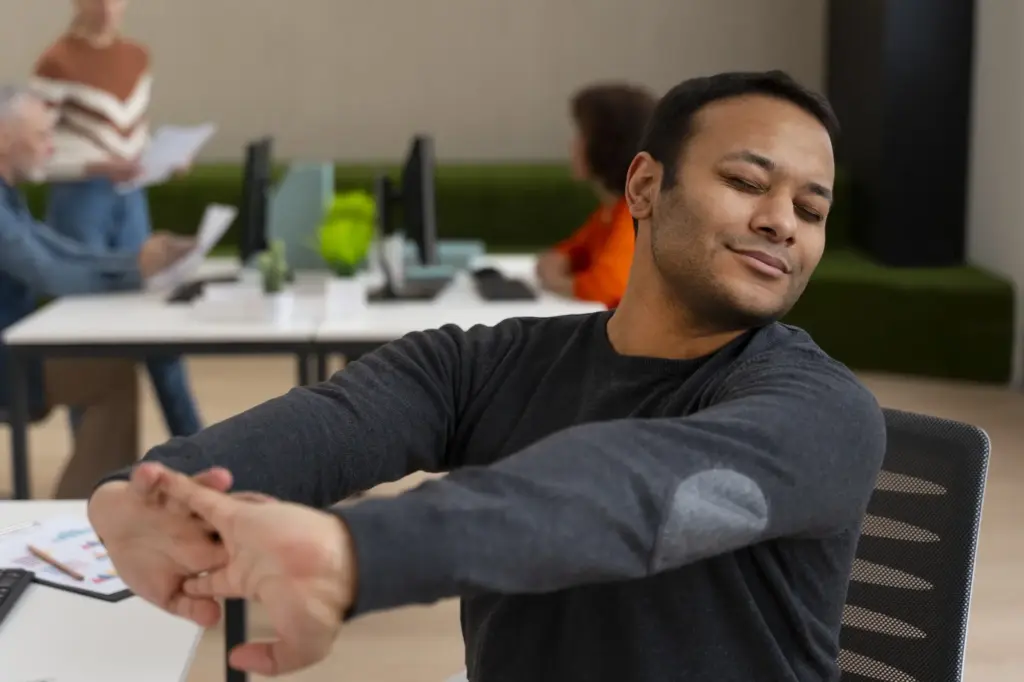
Movement interrupts stress chemistry and clears static from long sitting, yet you do not need a yoga mat or spare room. Gentle, discreet motions lubricate joints, brighten circulation, and reawaken posture. Try these tiny sequences between invites, and tell us which one you return to most.

Neck and Shoulder Melt

Let shoulders float to ears, then slide down your back like warm butter. Circle slowly, three times each direction. Tilt one ear toward the shoulder, breathe, switch sides. Imagine unhooking heavy armor. Many readers report fewer tension headaches after two days of this ritual.

Ankles, Calves, and Posture Wake-Up

Plant feet, lift heels then toes, alternating to pump ankles. Press knees together, then gently spread to wake hips. Sit tall as if a string lifts your crown. This quick chain improves venous return, reduces fidgety fatigue, and subtly signals readiness for attentive listening.

Sensory Cues That Calm Fast

Temperature Contrast Reset

Keep a cool gel pack or mug of warm tea. Hold against palms for twenty seconds, noticing the exact sensation. Temperature jolts interrupt rumination pathways and anchor presence. Choose what feels kind today, then jot a quick note about the difference you noticed.

Aromas that Ground Attention

Place a tiny vial of lavender, bergamot, or cedar within reach. Inhale gently, naming the notes you perceive. Aromas travel directly to emotional centers, often softening urgency. If scents are not workplace-friendly, imagine one vividly, which recruits similar calming circuits.

Tactile Tokens and Texture Focus

Keep a smooth stone, fabric swatch, or beaded bracelet. Explore edges, temperature, and weight while breathing slowly. Naming textures replaces spirals with concrete sensations. Share a photo of your favorite object in chat, inspiring others to craft thoughtful, respectful calming corners.

Micro-Mindset and Attention Reframes

Stress often spikes when attention narrows around fear or friction. Brief cognitive rituals widen options, restore perspective, and help you choose a steady next step. These reflective pauses fit into sixty-second windows and compound benefits across weeks. Invite your team to experiment together.

Eyes, Screens, and Visual Recovery

Screens strain eyes and drain patience when focus locks too tightly. Short visual resets refresh lubrication, relieve ciliary muscles, and expand perspective. Design small, respectful cues for your workspace, and let teammates know you are practicing so cameras and pauses feel normal.

Hydration, Micro-Nutrition, and Energy Swaps

Fill a bottle each morning and choose a cue: every meeting invite equals five mindful sips. Notice temperature, taste, and breath. Hydration supports attention and voice quality. Share your favorite bottle or infusion recipe to inspire colleagues and spark gentle accountability.
Keep a portioned mix of nuts, seeds, and dark chocolate nearby. Pair with fruit for fiber. Aim for slow-burning steadiness, not spikes. A calm stomach frees bandwidth for empathy. Ask your team to share go-to snacks that travel well and feel nourishing.
Delay the second cup until after food and sunlight, or swap for half-caf before tense negotiations. Pair caffeine with water to tame jitters. Track how timing affects patience, then compare notes with a friend to personalize what truly supports clear conversation.